Montessori Curriculum
LANGUAGE
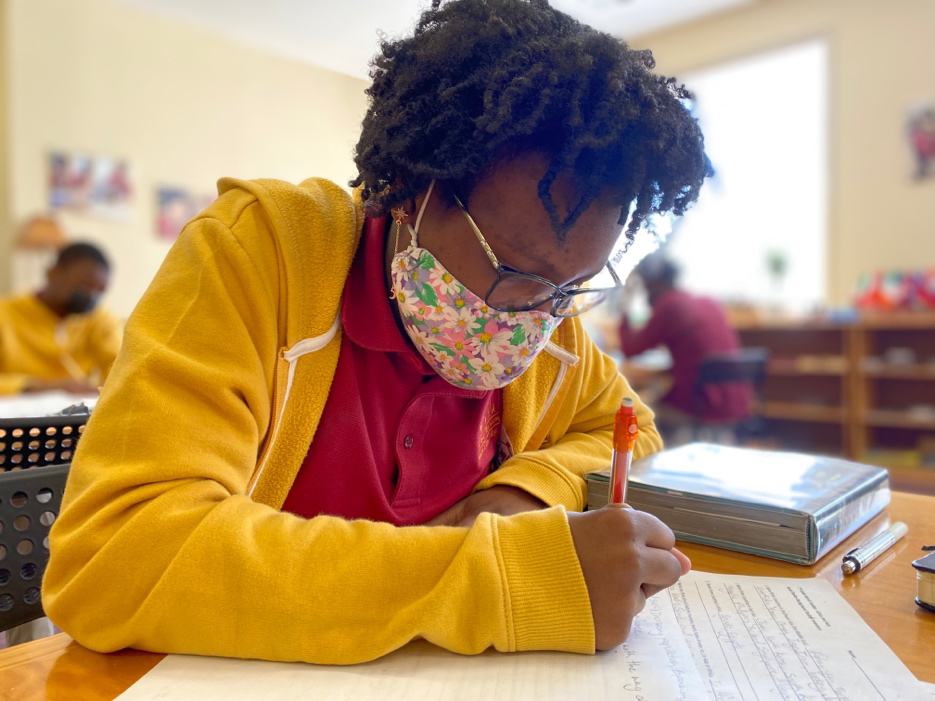
The Montessori language curriculum, consisting of reading and writing, has rich, didactic resources designed to support and challenge the various learning styles and needs of students across the multi-age classrooms. As the children transition from their primary years in Montessori, reading and writing flow with the child’s intrinsic drive to learn new and many words. Therefore, children in the lower elementary program develop knowledge of complex words as emphasis is placed on the study of words, function of words, composition, and targeted reading skills. In addition, the students acquire advanced vocabulary from exploring various forms of literature and text across the cultural content areas in science, history, geography, music, and art.
As inquiry continues about the world around them, the students become researchers, writers, and presenters. Thus, children in the upper elementary program tend to engage in active research, various forms of essay writing, debates, and project presentations.
MATHEMATICS
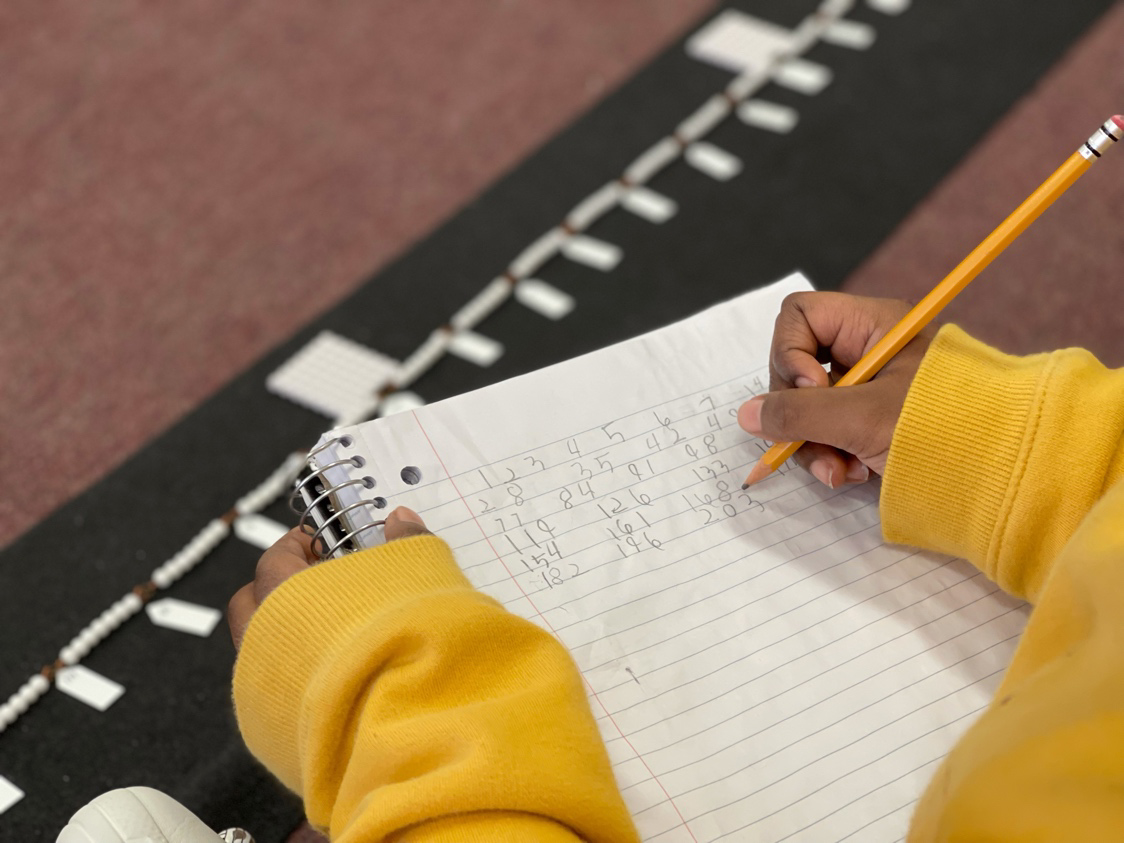
Mathematics is a core subject in the Montessori curriculum. It’s used in so many ways in our daily lives—from shopping to preparing food, collecting data, keeping track of time, managing resources, building structures, gardening, and the like. Presentation of math lessons in the Montessori environment is vastly different than the traditional way. In the Montessori classroom, math lessons and resources are sequenced on the shelves, starting with concrete concepts that are designed to lead children throughout the passage of abstraction. Various researched-based materials are usually presented to teach math concepts multiple ways before a child is ready to move to the next level of challenges. During the lessons, children naturally make real-time discoveries with the math materials through the support of kinesthetic learning; therefore, the child’s tactile needs are fulfilled with lessons targeted to meet them where they are needs. After all, the brain learns what the hand teaches.
As the children experience math using various resources and materials to explore the world around them, they also have a lot of opportunities to understand and develop a solid foundation in geometry as well.
GEOGRAPHY
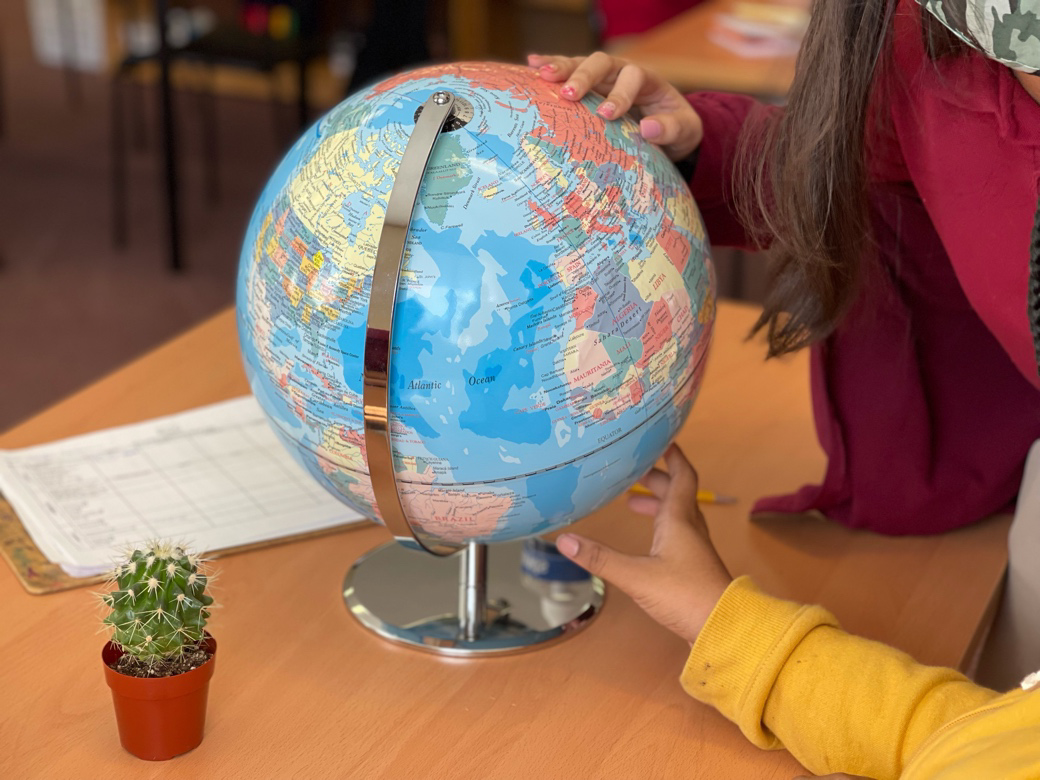
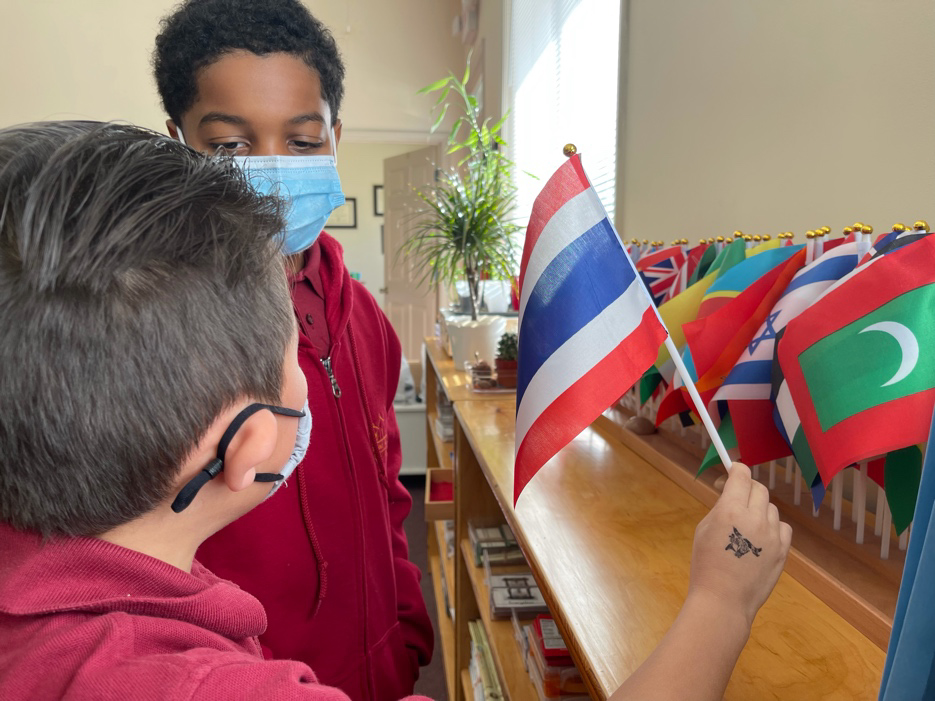
Like our Village, all of humanity shares this one globe. It is our deepest belief that the Montessori education method has the means of establishing lasting peace and tranquility for the world through education. This is because the notions of unity and oneness form the basis for all Montessori lessons. In this way, our geography curriculum is a perfect means of connecting children to the world around them and forming themselves into well-adjusted individuals. They are connected through the study of the physical features of the earth, study of human culture, and economic activities around the world. Children develop concrete understanding through concrete exploration of puzzle maps, biome study, researching various cultures spread across the globe, exploring the interconnectedness of humankind.
SCIENCE
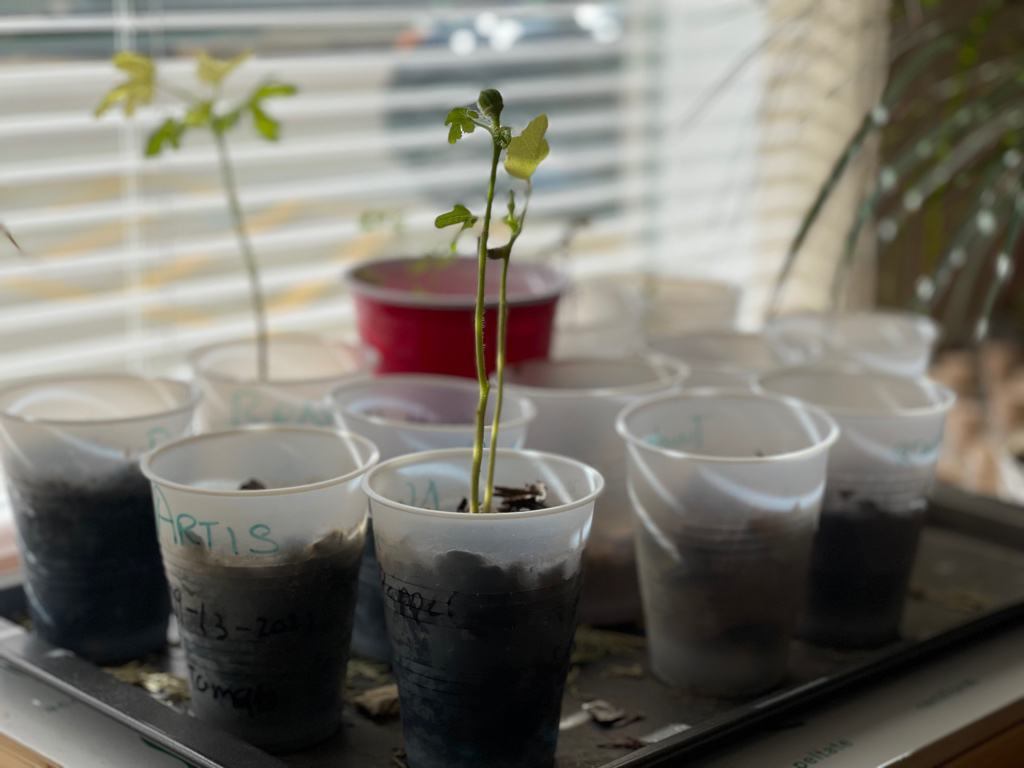
The sciences are an integral part of the Montessori cultural curriculum and consists of life and physical science such as chemistry, astronomy, geography, biology, etc. The curriculum reflects national science standards—preparing students to demonstrate understanding and proficiency in content knowledge, deepening their cognitive abilities through projectbased learning, classroom demonstrative experiences, and scientific inquiry. Scientific inquiry, the method we use to understand the natural world, involves observation, asking questions, predicting, hypothesizing, collecting evidence, experiment, analyzing data, and reporting. The children get to explore and discover the interrelationships of the universe through the sciences.
HISTORY
The study of the first civilizations and the fundamental needs of humans: food, shelter, clothing, transportation, defense, religion, etc., are explored in the lower elementary classroom; and as the students move up in grades, they continue their study of early humans, ancient civilizations, and early American history. The students study the history of earth, including the study of the different eons, eras, and periods— making meaningful connections. They also explore events that have happened in history, as well as current events, types of government around the world and their economic structure.